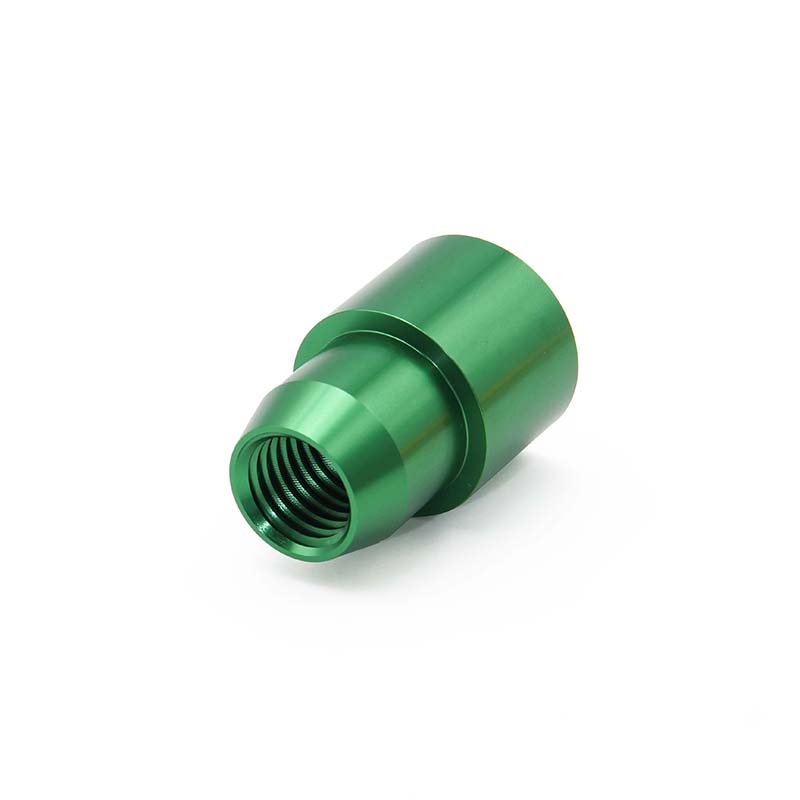


Aluminum CNC Machining parts are precision components manufactured from aluminum alloys using computer numerical control (CNC) machining technology. With excellent machinability, a high strength-to-weight ratio, and good corrosion resistance, aluminum is widely used to produce custom components for industrial equipment, automotive systems, electronics, robotics, aerospace, and other demanding applications.
As a reliable aluminum CNC Machining parts manufacturer, we provide custom CNC machined aluminum parts based on customer drawings, 3D CAD models, Material specifications, and application requirements. From rapid prototyping to low-volume and mass production, our aluminum CNC machining services help customers achieve accurate dimensions, consistent quality, and efficient manufacturing.
Our custom aluminum CNC machining services support a wide range of component designs, from simple mechanical parts to complex precision components. Different machining processes can be selected according to part geometry, dimensional tolerances, surface finish, and production volume.
CNC milling uses rotating cutting tools to remove material from an aluminum workpiece and create precise shapes, slots, holes, pockets, and complex surfaces. It is suitable for manufacturing aluminum brackets, mounting plates, housings, fixtures, and structural components.
For complex geometries, multi-axis CNC milling can reduce the need for repeated setups and improve machining efficiency. Custom CNC aluminum milling parts are widely used in industrial automation, electronics, machinery, and robotics.
CNC turning is suitable for manufacturing cylindrical or rotational aluminum components. Typical products include shafts, bushings, spacers, threaded parts, and precision connectors.
By combining CNC turning with drilling, boring, and threading operations, manufacturers can produce aluminum components with consistent dimensions and reliable assembly performance.
Different CNC machining configurations offer different levels of flexibility for custom aluminum parts.
3-axis CNC machining: Suitable for flat surfaces, pockets, holes, and many conventional components.
4-axis CNC machining: Allows additional rotational positioning to machine multiple sides of a component more efficiently.
5-axis CNC machining: Supports complex geometries, angled features, and multi-surface machining with fewer setups.
The appropriate machining method depends on part complexity, tolerance requirements, production quantity, and overall manufacturing cost.
Material selection directly affects the strength, machinability, corrosion resistance, and performance of CNC machined aluminum components. Common aluminum alloys include 6061, 6063, 5052, 7075, and 2024.
Aluminum Alloy | Key Properties | Typical Applications |
|---|---|---|
Aluminum 6061 | Good machinability, strength, and corrosion resistance | Machine components, brackets, housings |
Aluminum 6063 | Good extrudability and surface finish | Frames, profiles, structural components |
Aluminum 5052 | Good corrosion resistance and formability | Panels, enclosures, sheet components |
Aluminum 7075 | High strength-to-weight ratio | High-load mechanical and aerospace-related parts |
Aluminum 2024 | High strength and fatigue performance | Selected aerospace and engineering components |
Aluminum 6061 is a popular choice for general-purpose CNC machined aluminum parts because it offers a practical balance of strength, machinability, and cost. For applications requiring higher strength or specific environmental performance, other alloys may be more suitable.
CNC machining follows programmed toolpaths to manufacture components according to specified dimensions. With suitable equipment, tooling, and process control, it can achieve tight tolerances for precision aluminum parts.
Actual machining tolerances depend on part geometry, material condition, dimensions, and inspection requirements. Critical tolerances should be clearly identified in engineering drawings before production.
Aluminum has a lower density than steel, making it suitable for applications where reducing component weight is important. Its strength-to-weight ratio makes it useful for mechanical structures, equipment housings, robotic components, and transportation systems.
CNC milling and turning can produce a wide range of shapes, including precision holes, internal pockets, threads, curved surfaces, and multi-sided features. This flexibility supports OEM projects, product development, and customized industrial components.
Many aluminum alloys can be machined efficiently, helping reduce machining time and tool wear when appropriate cutting parameters are used. This makes aluminum a practical material for rapid prototyping, small-batch manufacturing, and larger production runs.
Surface finishing improves the appearance, corrosion resistance, and functional properties of custom aluminum components. The right treatment depends on the alloy, application, and required surface characteristics.
Surface Finish | Main Benefits | Common Applications |
|---|---|---|
Anodizing | Improves corrosion resistance and surface hardness | Housings, brackets, electronic components |
Sandblasting | Creates a uniform matte texture | Industrial and decorative components |
Polishing | Produces a smoother surface appearance | Visible precision components |
Brushing | Creates a directional surface texture | Panels, enclosures, consumer products |
Powder Coating | Adds a durable colored protective layer | Equipment housings and structural parts |
Chemical Conversion Coating | Provides corrosion protection and may support paint adhesion | Industrial and electronic components |
Anodizing is a common choice for aluminum CNC machining parts because it can improve surface durability while offering different color options. However, coating thickness and post-treatment dimensions should be considered when machining parts with tight tolerances.
Custom aluminum CNC machined parts are used across multiple industries due to their versatility, low weight, and manufacturing flexibility.
Automotive Industry: Engine-related components, brackets, housings, and lightweight structural parts.
Electronics Industry: Electronic enclosures, heat sink components, mounting plates, and connector housings.
Robotics and Automation: Robot brackets, joint components, machine fixtures, and structural connectors.
Aerospace Industry: Precision components manufactured from suitable aluminum alloys according to applicable technical requirements.
Industrial Machinery: Shafts, mounting blocks, mechanical fixtures, and equipment components.
Medical Equipment: Instrument housings, equipment supports, and precision mechanical components, subject to relevant material and regulatory requirements.
Custom CNC aluminum parts can be designed to meet the specific dimensional, mechanical, and environmental requirements of each application.
Selecting an experienced aluminum CNC machining parts manufacturer helps ensure that component design, material selection, machining processes, and quality control work together effectively.
A professional CNC machining supplier can manufacture parts according to 2D drawings, 3D CAD files, physical samples, or specific technical requirements. Design-for-manufacturing recommendations can also help identify unnecessary machining operations and improve production efficiency.
Dimensional inspection, surface quality checks, and material verification help ensure that CNC machined aluminum parts meet agreed specifications. Depending on the project, inspection may include calipers, micrometers, coordinate measuring machines (CMM), or other suitable measurement equipment.
Custom aluminum CNC machining can support prototype development, small production batches, and mass production, depending on available manufacturing capacity. This flexibility helps product developers test designs and enables OEM customers to scale production as demand changes.
Manufacturing costs depend on alloy selection, part size, geometric complexity, machining time, tolerances, surface finishing, and order quantity. Optimizing these factors early in the design stage can help reduce costs while maintaining the performance requirements of the finished parts.
Looking for a dependable supplier of custom aluminum CNC machining parts? We provide manufacturing solutions for customers who need precision aluminum components for industrial equipment, electronics, robotics, automotive systems, and other applications.
Send us your technical drawings or 3D CAD files, together with your preferred aluminum alloy, required tolerances, surface finishing specifications, and estimated order quantity. Our team can evaluate your project requirements and recommend a suitable CNC machining solution.
Contact us today to discuss your project and request a quotation for precision CNC machined aluminum parts tailored to your application.
JIESHENG HARDWARE is a professional manufacturer that focuses on customizing High- Precision Hardware Spare Parts more than 20 years of experience.
Copyright © 2026 Dongguan Jiesheng Hardware Industry Co., Ltd. All rights reserved. Privacy Policy

 English
