


 English

Choosing the CNC Milling process is very important for making accurate, dependable, and affordable custom machined parts. The best choice depends on the shape of the part, the Material being used, the size limits needed, and how many parts are being made. What the part is supposed to do. Picking the process can make the time it takes longer, the setup more expensive, and the quality less certain.
For equipment manufacturers, product designers, and people who buy industrial products, knowing the differences between 3-axis, 4-axis, and 5-axis CNC milling makes it easier to pick the best way to make the parts. This guide shows how to look at CNC milling processes to improve the design of the parts and work with a supplier to get good quality and fair prices.
1. What Is CNC Milling and Why Does Process Selection Matter?
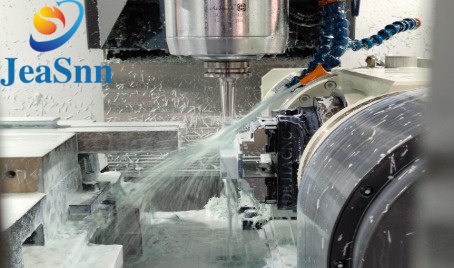
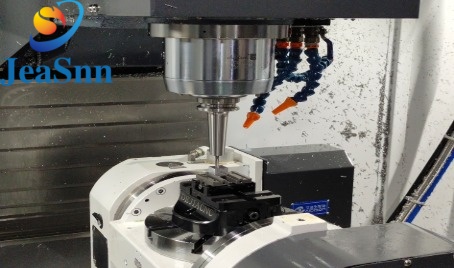
CNC milling is a way of making parts by removing material from a block using computer-controlled rotating cutting tools. It’s a subtractive process, meaning it cuts away material rather than adding it. This method is ideal for creating custom metal parts that need to be precise with tolerances. You can make holes, slots, flat surfaces, pockets, and complicated curves using CNC milling.
Common parts made this way include custom aluminum cases, precision brackets, stainless steel machine pieces, equipment covers, special fixtures, connectors, manifolds, and components used in cars, automation, medical devices, electronics, and robots.
Even though CNC milling can handle different shapes, not every part needs the same kind of machine. Simple aluminum parts with a few holes work well on a 3-axis mill. If a part has features on sides, a 4-axis machine is better. For parts with surfaces or complex curves, a 5-axis machine gives the best results.
The key is not to go for the most advanced machine. It's about choosing the process for the job. You want to balance accuracy, how fast you can make the part, how much it costs. How long it takes to deliver. Getting this balance right makes the whole process efficient and effective.
2. Understand the Main CNC Milling Processes
To choose the milling workflow, you first must understand how different CNC machine setups affect tool reach, fixture work, and manufacturing difficulty.
3‑axis CNC milling lets cutters travel along the X, Y, and Z axes. The workpiece stays. The tool cuts from a fixed angle for each setup. 3‑Axis CNC milling works for parts with outward‑facing features such as flat planes, cavities, grooves, holes and step profiles. It is ideal for machined plates, aluminum brackets, flat panels, basic housings and parts that have features from one side. 3‑Axis CNC milling is easy to program and set up, making it cost‑effective for prototypes and mass runs. The downside is that multi‑sided features require repeated re‑clamping, which adds labor time and increases the risk of errors.
4‑axis milling adds an axis to the three linear axes. With rotational movement of the workpiece or fixture, machinists can reach features along the part’s outer circumference. 4-axis milling is ideal for parts featuring side-located cutouts, cylindrical stock with milled flats, and indexed hole patterns. Without this capability, these parts would require numerous re-fixturing cycles on 3-axis mills. This process reduces frequent repositioning and sustains reliable tolerance control using common datum references. That said, rotary travel limits, workholding design, and tool access angles still require thorough planning.
5‑axis milling includes three linear plus two axes. The cutter or workpiece can tilt to tackle compound curves, angled bores, and intricate contours across faces. 5‑Axis milling excels at equipment parts housings, with angled features and multi‑orientation machining jobs. Fewer setups minimize repositioning errors. Protect critical feature alignment. So 5‑axis work carries higher programming and machine costs; it pays off only when intricate geometry or tight tolerances offset the extra expense.
3. Evaluate Part Geometry Before Choosing a Milling Process
Part geometry is one of the important factors in CNC milling process selection. A component's external shape may look simple. Internal pockets, narrow slots, deep cavities, and angled holes can significantly affect manufacturability.
3.1 Flat Surfaces, Holes and Shallow Pockets
3-axis CNC milling works perfectly for parts with simple faces and uncomplicated hole patterns.
A custom aluminum mounting plate fitted with drilled and tapped holes is a typical case. When all features are accessible from one side, there is no need for 4-axis or 5-axis machining, which avoids extra setup work and programming costs.
3.2 Multiple-Side Features
For multi-sided parts, compare the cost of repeated 3-axis setups with 4-axis and 5-axis machining options.
Include fixture preparation, repositioning, datum transfer, machining time, and inspection demands in your cost analysis. For custom parts requiring accurate positional control between holes or faces, minimizing setup changes is an effective way to improve quality.
3.3 Deep Pockets and Narrow Slots
Deep pockets and narrow slots can increase machining difficulty because tool reach, rigidity, chip evacuation, and vibration become more important.
Long tools may deflect under cutting forces, affecting accuracy and surface finish. Deep cavities can also require cutting conditions and additional finishing passes.
To improve manufacturability:
Avoid unnecessary pockets.
Use internal corner radii with standard cutting tools.
Provide clearance for tool and holder access.
Review wall thickness and workpiece rigidity.
Specify tolerances only on functionally critical features.
If the part design can be adjusted without affecting performance, these changes may reduce machining time and the need for tooling.
3.4 Thin-Wall Components
Thin-wall aluminum enclosures, lightweight brackets, and precision covers are susceptible to warping under cutting forces and clamping pressure throughout CNC milling.
To address this, a robust machining plan features phased material removal, supplementary part support, and carefully executed finishing cuts.
4. Select the Right CNC Milling Process for Your Material
The material that you pick shapes the wear on the tool, the forces that cut, the time needed to finish, the finish you can get, and the overall cost. When you order custom CNC metal parts, the material grade you choose must match the part’s needs for strength, corrosion resistance, weight goals, heat performance, and the conditions the part will meet.
Aluminum alloys such as 6061 are widely used for custom CNC parts because aluminum alloys are easy to machine, light, and work well in applications. Aluminum alloys are used for enclosures, brackets, mounting plates, jigs, and other structural parts. Simple aluminum parts with features that're easy to reach are best made using a 3‑axis CNC milling process, which is usually more affordable. If a part has shapes on multiple sides, a multi‑axis CNC milling process offers better results. Keep in mind that surface treatments like anodizing should be decided early because they change how the part looks and can affect the part’s dimensions.
304 and 316 stainless steel are widely used for parts that need sustained corrosion protection. They are more challenging to machine than aluminum. CNC milling processes for stainless steel need careful planning to control heat buildup, work hardening, and quick tool wear, while taking tool reach, machine rigidity, and tight dimensional tolerances into consideration.
Carbon steels and alloy steels are selected when strong, durable parts are needed, especially where wear resistance matters. The CNC milling process and tools used depend a lot on the steel grade. How it has been heat treated. If the part must have surfaces, the manufacturer should check how heat treatment or other finishing steps might change the part’s size.
Brass is a choice for precision fittings and connectors because brass machines well. Gives clean results. Copper is often picked for its ability to conduct electricity and heat. Copper behaves differently during cutting compared to metals. In the end, the best material choice should be based on what the part needs to do, not on how much it costs to machine.
5. Consider Tolerances, Surface Finish and Inspection
The selected CNC milling process must be capable of producing the required dimensions and allowing those dimensions to be inspected.
Dimensional Tolerances
Not every dimension on a custom machined part needs a tolerance. Critical dimensions may control assembly fit, alignment, sealing, or movement. Other dimensions may only set shape or clearance. Applying tight tolerances across the entire drawing can increase machining time, inspection effort, and rejection risk. An effective approach is to identify critical‑to‑function dimensions and communicate them clearly through the engineering drawing.
Surface Finish
Surface finish requirements depend on the component’s function and appearance. A general mounting surface may not need the finish as a sealing face, sliding interface, or visible cosmetic surface. Specify the finish for functional areas and identify any surfaces that require polishing, anodizing, plating or other treatments.
Inspection Requirements
Inspection must be planned together with machining instead of being an after-production add-on. Quality control may include dimensional checks, hole position verification, flatness testing, CMM inspection, and surface roughness measurement. For custom CNC metal assembly parts, inspection should focus on the critical dimensions and feature relationships controlling fit and function.
Why Work with a Custom CNC Machining Supplier?
Picking a custom CNC Machining supplier is more than selecting machine tools. It requires close coordination covering design, material selection, machining plans, fixturing, finishing, and quality control.
An experienced supplier will assess your drawings, detect potential manufacturing challenges, and advise on processes that satisfy your parts’ functional and commercial demands.
For OEMs and industrial buyers, working with a Custom CNC Machining Supplier can make parts easier to produce, reduce costs, and set up a repeatable production plan. I have seen this happen time and again.
At CNCPartschina.com, customers who want custom CNC metal parts can talk about their component needs. Give technical details for a quote. Whether you need custom aluminum housings, precise mounting brackets, stainless steel parts, or other CNC machined metal pieces, clear specifications are the step to a successful project.
Looking for a manufacturing partner for your custom machined parts? Send your 2D drawings, 3D CAD files, material needs, and order quantity to CNCPartschina.com at engineer@cncpartschina.com or 8618998057602 to get a quote and talk about a CNC milling solution.